← Home · Slopes & Walls

Retaining Wall Design Laval: Geotechnical Expertise for Challenging Conditions

Together, we solve the challenges of tomorrow.

LEARN MORE →

Laval's rapid transformation from a patchwork of rural parishes into Quebec's third-largest city has placed unprecedented demand on its subsurface. The island geography, framed by the Rivière des Mille Îles and Rivière des Prairies, dictates that much of the available land sits atop sensitive Champlain Sea silts and compact glacial till. For any project involving grade changes along Autoroute 15 or new foundations in Chomedey, a proper retaining wall design must reconcile ambitious architectural vision with the reality of a soil profile that can transition from stiff clay to loose sand in less than a meter. The engineering team tackles these interfaces daily, applying a methodology that begins with thorough site characterization before any geometry is drafted. Integrating a CPT test early in the investigation provides the continuous stratigraphic profile that conventional boreholes often miss in these transitional deposits.

In Laval's Champlain Sea deposits, lateral earth pressure on a retaining wall is not a constant—it evolves with the pore-water pressure regime that shifts between spring thaw and late-summer drought.

Methodology and scope

Compliance with the National Building Code of Canada and CSA A23.3 forms the backbone of every structural calculation, but in Laval, the geotechnical narrative is written by the soil's stress history. The heavily overconsolidated upper crust of the Champlain clay can support significant bearing pressure, yet its fissured fabric requires a conservative approach to long-term lateral earth pressure, particularly where seasonal moisture fluctuations in the top 3 meters create a dynamic shrink-swell envelope. We employ strain-compatibility analysis for cantilever walls and gravity structures, ensuring that the design does not simply meet minimum factors of safety but anticipates the gradual relaxation of horizontal stress that occurs in excavations left open through a Quebec winter. When bedrock is shallow in the western sectors, a complete understanding of the rock mass is essential; in many cases, the investigation is complemented with seismic refraction to map the top of the competent limestone and identify any karstic voids before finalizing the wall's heel geometry.
Retaining Wall Design Laval: Geotechnical Expertise for Challenging Conditions
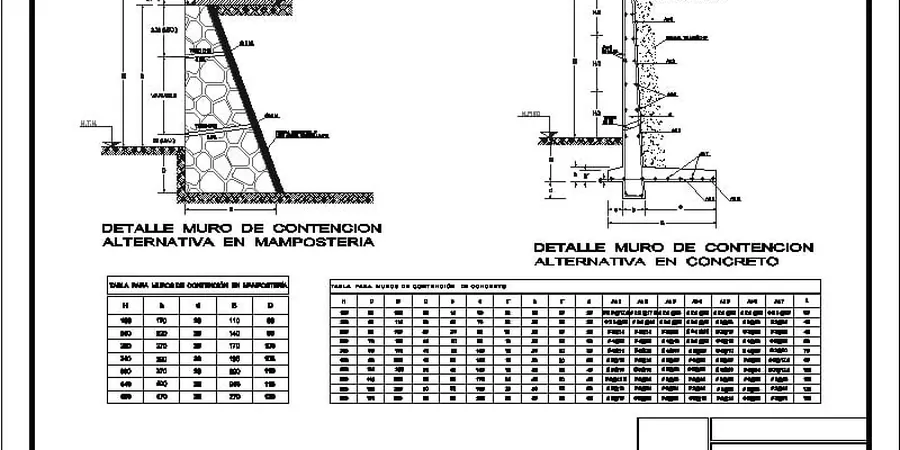
Technical reference image — Laval

Local considerations

The field crew mobilizes a track-mounted hydraulic drill rig equipped with thin-walled Shelby tubes and an SPT auto-hammer calibrated to ASTM D1586 energy standards. In the confined spaces behind existing commercial strips along Boulevard Saint-Martin, the rig's maneuverability is tested, but it is the sampling protocol that defines the outcome. Pushing a 75 mm Shelby tube into Champlain clay at a steady 2 cm per second is a skill developed over hundreds of meters of core recovery across Laval. A rushed sample means disturbance, and disturbance means an underestimated preconsolidation pressure—leading directly to a retaining wall design that is either excessively conservative or dangerously optimistic regarding the lateral squeeze potential at the base of the excavation.

Need a geotechnical assessment?

Reply within 24h.

Email: contact@geotechnical-engineering.org

Technical parameters

ParameterTypical value
Internal friction angle (glacial till)32° – 38° (drained)
Undrained shear strength (Champlain clay crust)50 – 150 kPa
Preconsolidation pressure (OCR)1.5 – 3.0+ (upper 5 m)
Design groundwater level1.2 – 2.5 m below grade (seasonal)
Backfill type (free-draining)Crushed stone, 20 mm clear, compacted to 95% SPD
Seismic coefficient (kh)0.05 – 0.12 (NBCC seismic hazard)

Associated technical services

01

Cantilever and Counterfort Wall Engineering

Reinforced concrete walls analyzed for overturning, sliding, and bearing. We model the transition zone where the rigid crust of the Champlain clay grades into softer, normally consolidated material, using limit equilibrium and finite element methods to size the stem and base slab appropriately.

02

Anchored and Soil-Nailed Systems

For deep cuts exceeding 4 meters, we design permanent and temporary tieback anchors. Each bond length is calculated based on in-situ shear strength from pressuremeter tests, with corrosion protection levels specified per PTI recommendations for the aggressive soil chemistry found in isolated pockets of Laval's former agricultural zones.

03

Segmental Block and MSE Walls

Mechanically stabilized earth structures using geogrid reinforcement are a pragmatic solution for commercial developments in Laval-sur-le-Lac. The design accounts for the low pH and sulfate content of the native backfill, selecting polymeric reinforcement with the appropriate long-term creep reduction factors.

04

Drainage and Filter Design

A retaining wall is only as effective as its drainage system. We specify graded filter blankets, chimney drains, and weep hole geometry to prevent the buildup of hydrostatic pressure behind the wall, a common failure mechanism observed in older Laval constructions that omitted a continuous free-draining column.

Applicable standards

NBCC 2015 (Part 4 – Structural Design), CSA A23.3:19 (Design of Concrete Structures), ASTM D1586-18 (Standard Test Method for SPT), CAN/CSA-S6-19 (Canadian Highway Bridge Design Code), ASTM D422-63 (Particle-Size Analysis)

Frequently asked questions

What is the typical cost range for retaining wall design in Laval?

The engineering fees for a retaining wall design typically range from CA$1,500 to CA$5,200, depending on the wall height, the complexity of the soil profile, and whether supplementary investigation like a CPT or laboratory triaxial testing is required. A simple gravity wall under 1.2 meters will fall at the lower end, while a fully anchored system with instrumentation monitoring will be at the upper end.

How does the Champlain Sea clay affect lateral earth pressure?

The Champlain clay is heavily overconsolidated in its upper crust due to glacial unloading and desiccation. This means the in-situ horizontal stress (K0) can exceed 1.0 near the surface. When you excavate in front of the wall, the stress relief can trigger progressive failure along fissures. Our designs use a K0 that decays with depth and account for the soil's strain-softening behavior, avoiding the generic Rankine values that underestimate the actual load on the wall.

What seismic provisions apply to retaining walls in Laval?

Laval sits within a moderate seismic hazard zone as defined by the NBCC 2015. For retaining walls over 3 meters, we apply the Mononobe-Okabe pseudo-static method to calculate the seismic increment of lateral earth pressure. The horizontal acceleration coefficient is derived from the site-specific spectral response acceleration at 0.2 seconds, adjusted for Site Class D or E, which is prevalent across most of the island.

Do you handle the municipal permit process for the wall?

The engineering package prepared for a Laval retaining wall includes the sealed calculations, structural drawings, and a geotechnical report that details the soil parameters used. This package is formatted to meet the specific submission requirements of the Service de l'urbanisme de Laval. While we do not submit on your behalf, the documentation is structured so that the permit review proceeds without technical queries regarding the foundation conditions.
Location and service area

We serve projects across Laval and its metropolitan area.

View larger map