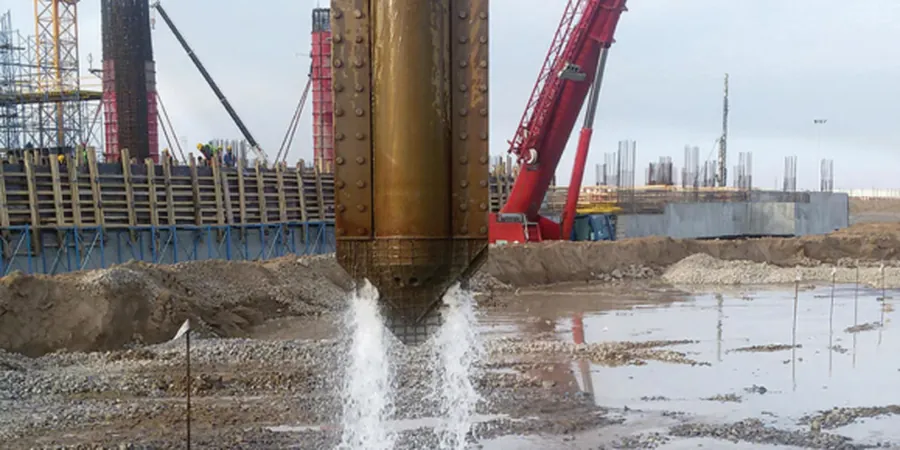
A depth vibrator hanging from a crawler crane is a common sight around Laval when the soil won't cooperate. The vibroflot goes down, compressed air or water flushes the tip, and the granular material rearranges into a denser state. In Laval, where thick fluvial sands along Rivière des Prairies and its tributaries often show N-values below 10, this is not just ground improvement—it's the difference between a buildable lot and a costly headache. The CPT test helps us map the loose zones before mobilization, and once we have the profile, the vibrocompaction grid gets designed to match the target relative density the structural engineer needs.
In Laval's post-glacial sands, reaching 70% relative density with vibrocompaction turns a problematic site into standard-bearing ground.
Local considerations
Laval winters are no joke—a frozen crust half a meter thick changes how we run a vibrocompaction operation. If you start in February, you pre-drill through the frost; if you finish in November, you protect the densified pad before the freeze-thaw cycles mess with the surface. The biggest risk, though, is misjudging the silty content. A sand that looks clean can carry 18% fines, and that kills the compaction radius. Then you end up with untreated lenses that settle later, and the owner gets cracks he did not pay for. That is why we run pilot tests on every Laval site—no exceptions.
Frequently asked questions
How much does a vibrocompaction design and execution cost in Laval?
For a typical residential or light commercial lot in Laval, vibrocompaction packages—including the pilot test, production, and verification—range from CA$1.950 to CA$7.200, depending on the treated area and depth. Deeper loose sand or a tight grid pushes it toward the upper end.
What type of soil in Laval works best with vibrocompaction?
Clean to slightly silty sands with less than 12 to 15 percent fines. The fluvial sands along Rivière des Prairies usually fall in this range, but we always run a grain-size test first—if the silt content is too high, we consider stone columns instead.
How do you check the compaction actually worked?
We compare CPT tip resistance before and after treatment. An increase of 50 to 100 percent in cone resistance is typical in Laval sands. We also drill a couple of SPTs if the building official wants an N-value record for the permit file.
Can you vibrocompact in winter in Laval?
Yes, but it takes extra steps. We pre-drill through the frost layer, keep the water lines heated, and cover the treated area with insulated blankets once the probe moves to the next zone. The process works—it is just slower and more expensive.