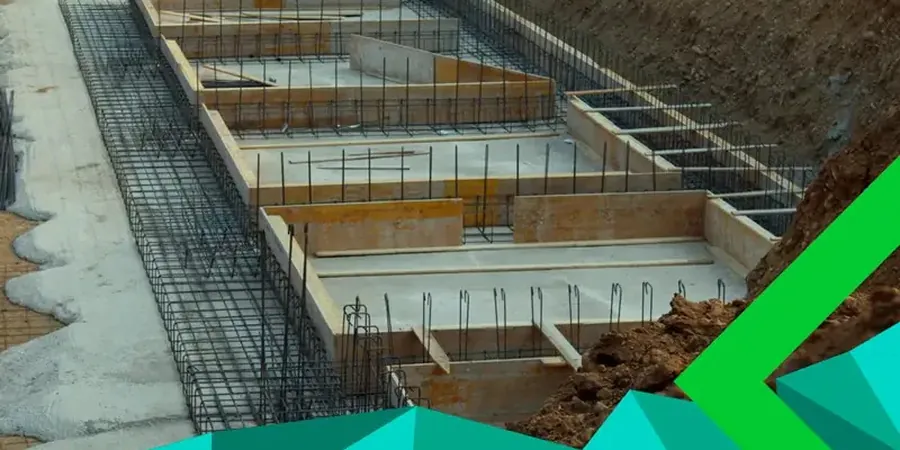
The first signal that subsurface conditions in Laval demand respect is the resistance encountered while pushing a cone penetrometer through the stiff desiccated crust. At Île Jésus, where the city extends across an island between the Rivière des Prairies and the Rivière des Mille Îles, the classic sequence of Champlain Sea deposits dictates that a dense surface layer of fissured brown clay abruptly gives way to soft, sensitive silty clay at depth. Designing shallow foundations here means reconciling the available bearing capacity of that crust with the long-term consolidation settlements that develop when load bulbs reach the underlying normally consolidated material. Because the crust thickness varies from less than 1.5 meters near the riverbanks to over 4 meters on the higher terraces, each lot requires its own verification. The engineering team integrates CPT test data to map the transition between the oxidized crust and the intact grey clay, which is then correlated with laboratory consolidation curves to estimate settlement magnitude and rate under the NBCC 2020 serviceability criteria.
The stiff desiccated crust of Laval behaves as a natural raft, but its variable thickness demands site-specific verification of punching shear and consolidation settlement.
Frequently asked questions
What is the typical allowable bearing pressure for shallow foundations on Laval's clay crust?
For a stiff intact crust with undrained shear strength above 50 kPa, the allowable bearing pressure under NBCC 2020 typically ranges from 75 to 125 kPa for strip footings, assuming a factor of safety of 3. However, settlement often governs the design before bearing failure becomes critical, so the final value is reduced where consolidation analysis predicts more than 25 mm of total settlement.
How does the sensitive Leda clay affect shallow foundation design in Laval?
The high sensitivity of the intact grey clay means that any disturbance, whether from excavation, vibration, or seismic shaking, can reduce the undrained shear strength by 80 to 95 percent. The design must protect the sensitive layer by maintaining the overburden pressure exerted by the crust, avoiding open excavations that unload the clay, and verifying that the factor of safety against progressive failure exceeds 2.0 under the design load configuration.
What is the estimated cost range for a shallow foundation design package in Laval?
A complete geotechnical design package for shallow foundations on a typical residential or light commercial lot in Laval falls between CA$2,600 and CA$4,290, depending on whether CPT soundings, laboratory consolidation tests, and a detailed settlement analysis are required. The scope includes the bearing capacity report, the structural recommendation for footing dimensions, and the seismic stability verification under NBCC 2020.
Is it mandatory to perform CPT testing before designing a shallow foundation in Laval?
While the NBCC does not explicitly mandate CPT for every project, the Quebec geotechnical practice considers it essential on the Champlain Sea deposits because the continuous tip resistance and pore pressure profiles allow the designer to identify the exact depth of the crust, detect thin silt seams that can act as drainage paths and accelerate consolidation, and quantify the spatial variability of the soft clay, which directly influences the differential settlement estimate.